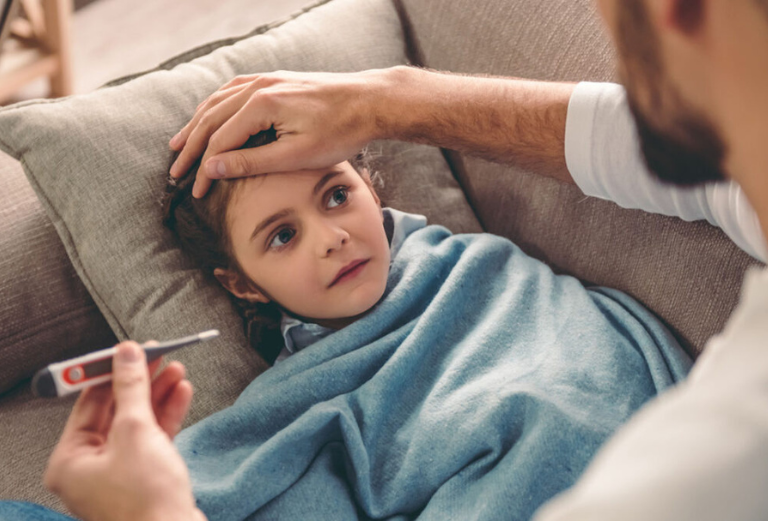
When your child has a high temperature, it can make any parent feel anxious. Most parents worry when they see their child is hot to the touch or seems to be acting differently than normal, either fussy or tired. Fever is generally the body’s way of fighting off a virus or harmful bacteria, but knowing when to contact a doctor if your child has a fever and to seek appropriate fever treatment is an important part of caring for your child.
At MD Clinics, we know that having a sick child is very stressful for parents. Our providers provide quick and gentle treatment for fever in infants and children so that you can be confident that your child is receiving the best possible care.
In this blog post, we will discuss the common causes of fevers, what you can do at home to help your child, and when it’s appropriate to see a pediatrician or to search for fever treatment support.
What Exactly Is a Fever in Babies?
A baby’s fever is not a medical condition, nor is it a diagnosis, but rather a clinical indication of something larger going on in the body. A fever is often viewed as a positive response by the body to fight off infections. While most parents know that a fever can cause concern, it is particularly important to take care when it occurs in infants, especially in those younger than 1 year. When taking your child’s temperature, consider using rectal methods, as they provide the best overall accuracy of the actual temperature. For instance:
- A rectal temperature of 100.4°F (38°C) or more is considered a fever in infants.
- A slightly lower temperature was recorded using the forehead, ear, or underarm methods.
Common Causes of Fever in Babies
If you are unsure or if your fever appears too high, it is advisable to consult an urgent care facility. The rise of temperature can be attributed to several factors, but the most frequent fever symptoms & treatment are:
1. Viral Infections
Viral Infections such as the cold, flu, RSV (Respiratory Syncytial Virus), and also “Viral fever.” These typically go away on their own, but they can also be uncomfortable.
2. Bacterial Infections
Bacterial Infections can include ear infections, throat infections, and urinary tract infections. Most of the time, bacterial infections will require antibiotics.
3. Teething
Often, teething causes only mild elevations in temperature, not an actual fever over 100.4 degrees Fahrenheit. If a baby has a high fever, he likely has something else going on.
4. Vaccination
After receiving routine vaccinations, babies may experience a low fever, and that is perfectly normal and generally will go away within a couple of days.
5. Overheating
Overheating may occur due to too many layers of clothing or warm environments, leading to a slight increase in body temperature.
Identifying signs when your baby has a fever.
Fever is not just detected by touch (i.e., ‘temperature’), but can manifest in a variety of ways depending on the child’s age and overall health. If you notice that your baby is exhibiting signs of distress, it is essential to seek medical assistance immediately. Signs and symptoms that usually accompany fever may include:
- Increased fussiness/irritability
- Increased fatigue
- Decreased appetite
- Increased respiration rate
- Flushed cheeks
- Increased perspiration (sweat) and chills (shivering)
- Increased frequency of crying as compared to normal
- 2) Signs of dehydration (dry mouth, fewer wet diapers)
Ways to Help Baby at Home With Fever
When there is a fever or illness, it is often a good idea to consult a physician or pediatrician for proper diagnosis and fever treatment. However, if you are unsure of your baby’s condition, there are some things you can do at home to help alleviate some discomfort.
1. Hydration
Fever in babies can lead to dehydration, especially if the baby has been unable to eat/drink adequately. Therefore, it is important to ensure the baby stays hydrated by giving him/her:
- Breast Milk
- Infant Formula
- 10-15 ml of (small amounts of) water for babies over 6 months
- Being hydrated will help regulate our baby’s body temperature
2. Dress Your Baby Appropriately
Do not over-bundle or wear too many layers of clothing. Babies wear light, breathable clothing so the body can naturally cool off.
3. Medication (after a consultation with a doctor)
-
For babies over 3 months of age
Acetaminophen (Tylenol)
-
For babies over 6 months of age
Ibuprofen (Motrin/Advil)
-
Never give children:
- Aspirin (very dangerous for children)
- Any over-the-counter medications that are meant for adults
- Use proper dosing instructions based on your baby’s weight
4. Give a Lukewarm Bath
No cold baths forbidding. Cold water may cause them to go into a shivering state and actually raise their body temperature.
5. Allow for the rest of Bathe by
The more restful he/she is, the sooner the immune system will begin fighting the infection.
Should your baby’s fever persist, visit MD Clinics or urgent care for fever to get timely evaluation and care.
When Should You Contact Your Physician?
When babies become ill, it is very important to know when to contact your health care provider. Take your baby to the doctor or urgent care facility as soon as possible if he/she has any of the following:
For Infants Less Than 3 Months
The following symptoms indicate that your baby needs to be seen immediately:
- Temperature greater than 100.4° F (38° C)
- This is always an emergency
For Babies Ages 3-12 Months
Contact Your Physician if Your Baby has:
- Temperature greater than 102° F (38.9° C)
- Temperature lasting more than 24 hours
- Not eating/drinking
- Decrease in # of wet diapers
- Continuing to vomit/Diarrhea
- Difficulty breathing
- Rash and fever
For Babies of All Ages
Take your baby to the physician immediately if he/she exhibits any signs of:
- Seizures
- Excessive crying or irritability
- Extreme lethargy or inability to be awakened
- Skin appears blue/pale
- Stiff neck
What Are the Benefits of Using MD Clinics to Treat Infant Fever?
When your infant has a fever, you should not feel obligated to visit an emergency department for hours on end; MD Clinics offers reliable treatments tailored to a child’s individual needs. MD Clinics provide fast, dependable, and compassionate fever treatment for babies. Parents continue to use MD Clinics because:
- Same-day treatment is available
- Minimised wait times
- Experienced pediatric care staff
- Gentleness in testing procedures
- Timely, accurate diagnosis
- Educating parents on the causes of the fever
- Management of underlying infections, dehydration, and discomfort
- MD Clinics offers reliable fever treatment at multiple locations throughout California.
Conclusion
Taking care of a baby with a fever can be stressful and overwhelming, but knowing what caused the fever, how to properly care for your sick child at home, and identifying the signs of illness will help ease some of the stress. Many fevers are mild and treatable at home; however, it is important to pay attention to warning signs, and at times, a professional opinion may be necessary. If the fever lasts for more than 3 days, is very high, or is accompanied by other symptoms that may cause concern, it would be a good idea to start looking for an urgent care clinic near me so you can receive the care you need as quickly as possible from a qualified provider.
MD Clinics provides same-day pediatric care with compassion and professionalism. We want to see your child feeling better as soon as possible, so we encourage you to get in touch if you need an expert opinion on your child’s health or care. Keep in mind that your child’s health and comfort are our top priority!
To learn more about whether a fever can wait or requires medical evaluation, check out our detailed guide here:
Should I wait it out or visit an urgent care for fever?
FAQs
What are the symptoms of a fever in a newborn?
Fever in infants is defined as a rectal temperature of greater than or equal to 100.4 degrees Fahrenheit or 38 degrees Celsius.
Does teething bring on a fever?
Teething may cause a slight increase in temperature; however, it is unlikely to elevate body temperature to the level of a true fever, defined as 100.4 or greater.
When can you administer fever treatment to my baby?
Only administer acetaminophen or ibuprofen when instructed by your physician or when your baby is old enough to receive fever medication.
When should my child see an urgent care facility because of a fever?
An immediate visit to the urgent care facility should be made for fevers that are elevated, continue for more than 24 hours, with vomiting, dehydration, or trouble breathing.
Can someone experience a fever without medical treatment?
Yes, but high fevers and persistent fevers will need an evaluation to determine the cause, particularly in infants.